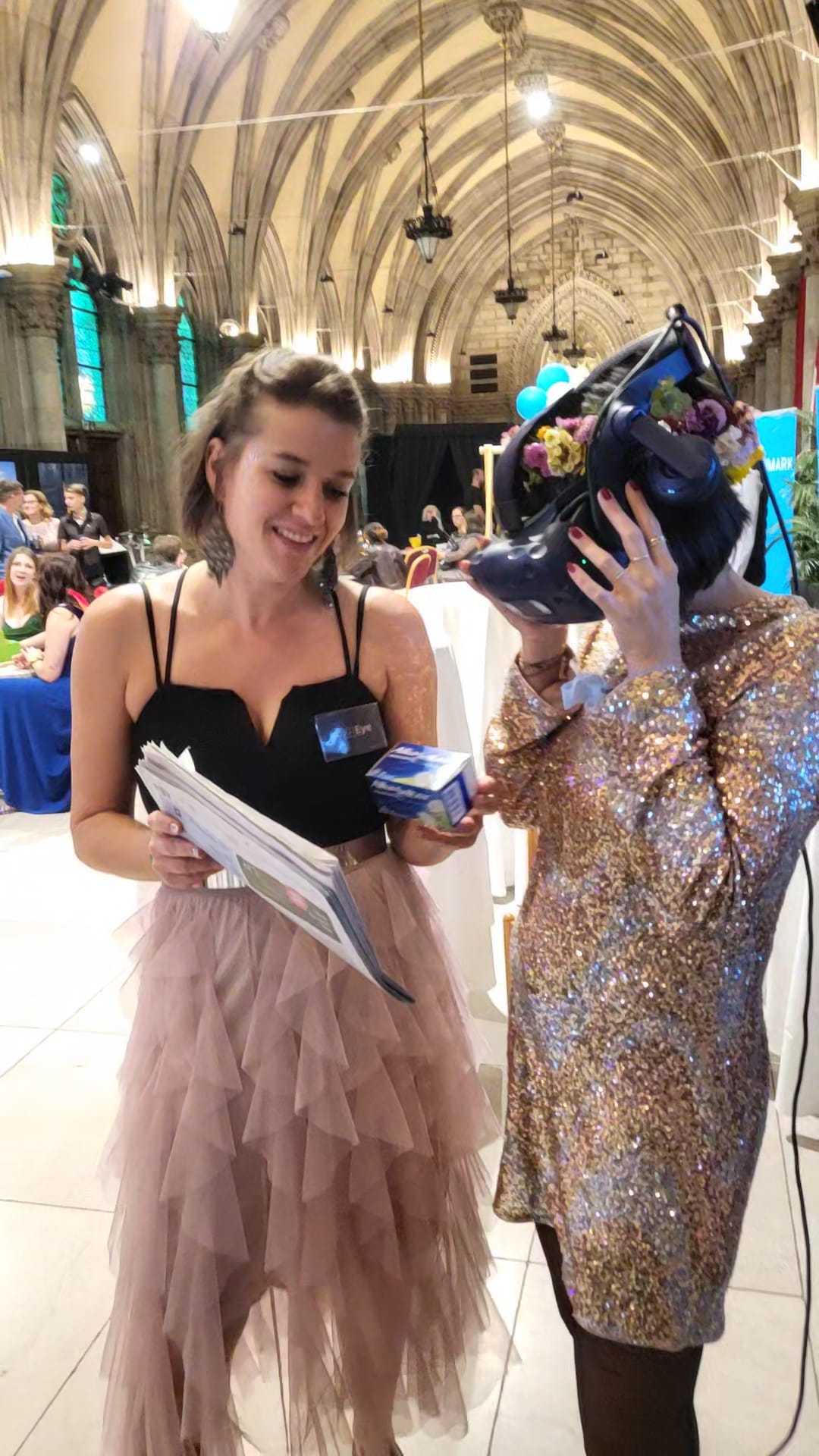
XREye at the Diversity Ball 2025 – powered by Wiener Stadtwerke
XREye joined the Diversity Ball 2025 for the very first time – Our XR experiences allowed visitors to feel what it’s like to live with a visual impairment – raising awareness for barriers in everyday life. An evening full of energy, exchange, and inclusion!
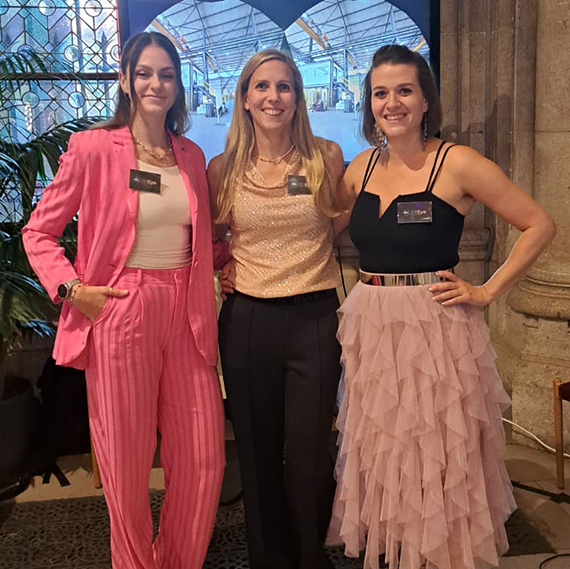
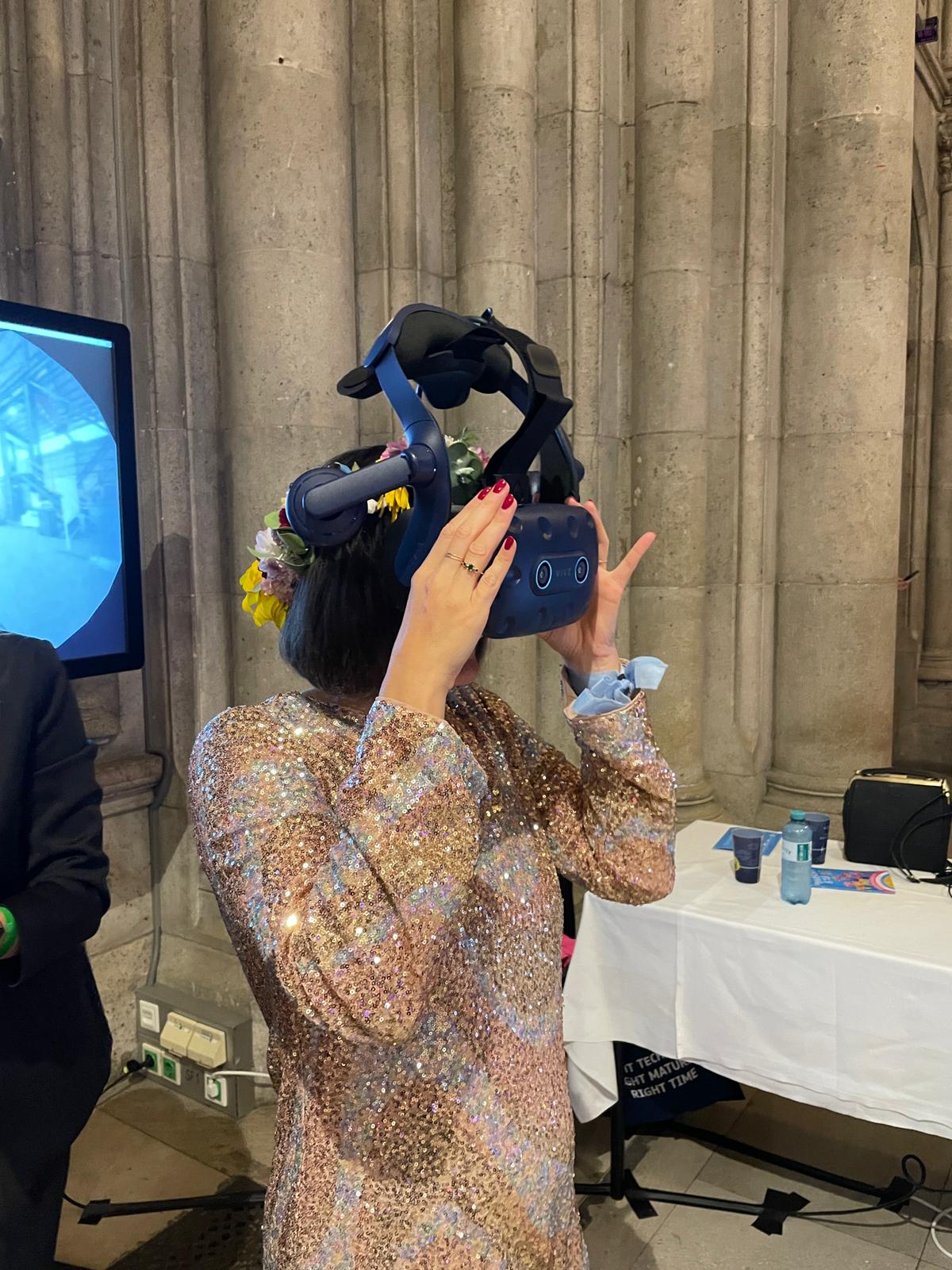
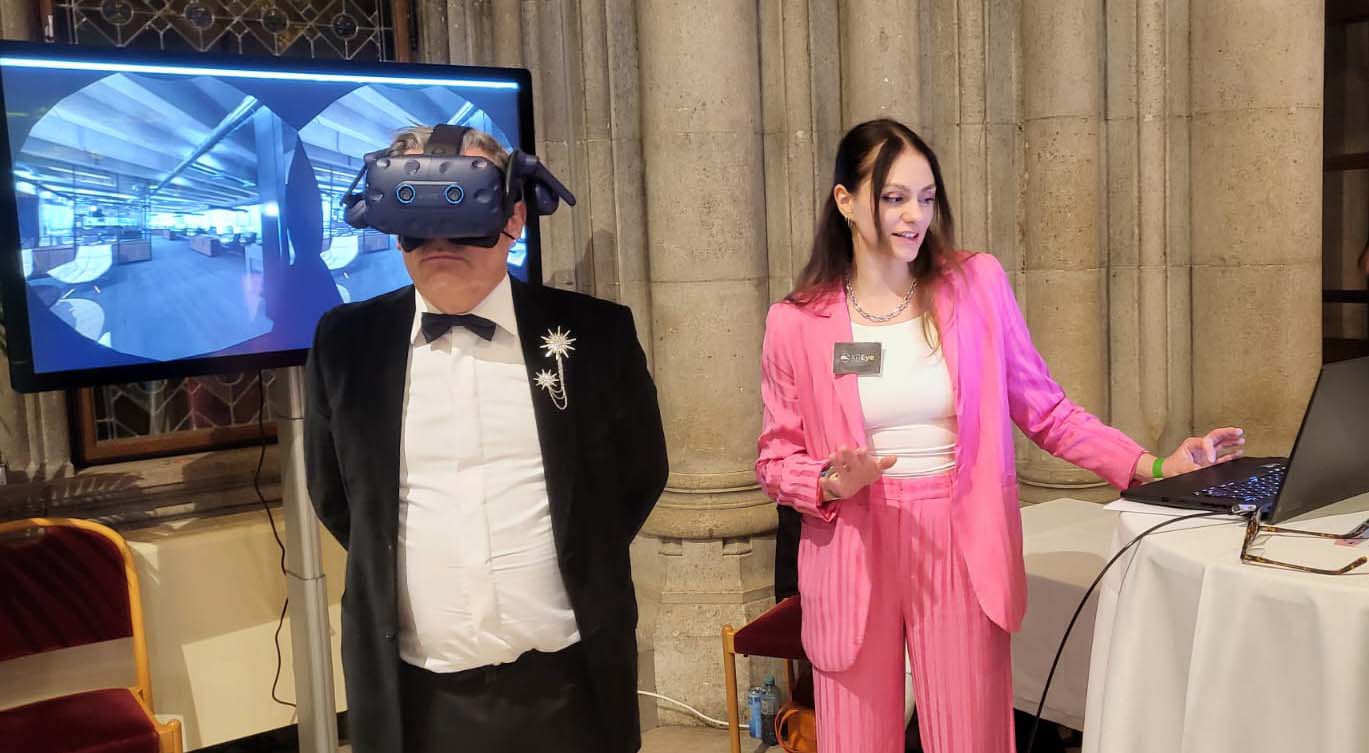
For the very first time, we presented our Experience Booth at the Diversity Ball in Vienna, and it was an unforgettable evening. Visitors could dive into our XR experiences and get a sense of what it might feel like to live with a vision impairment. Our mission was clear: to raise awareness, foster empathy and show how immersive technology can support inclusion in meaningful ways.
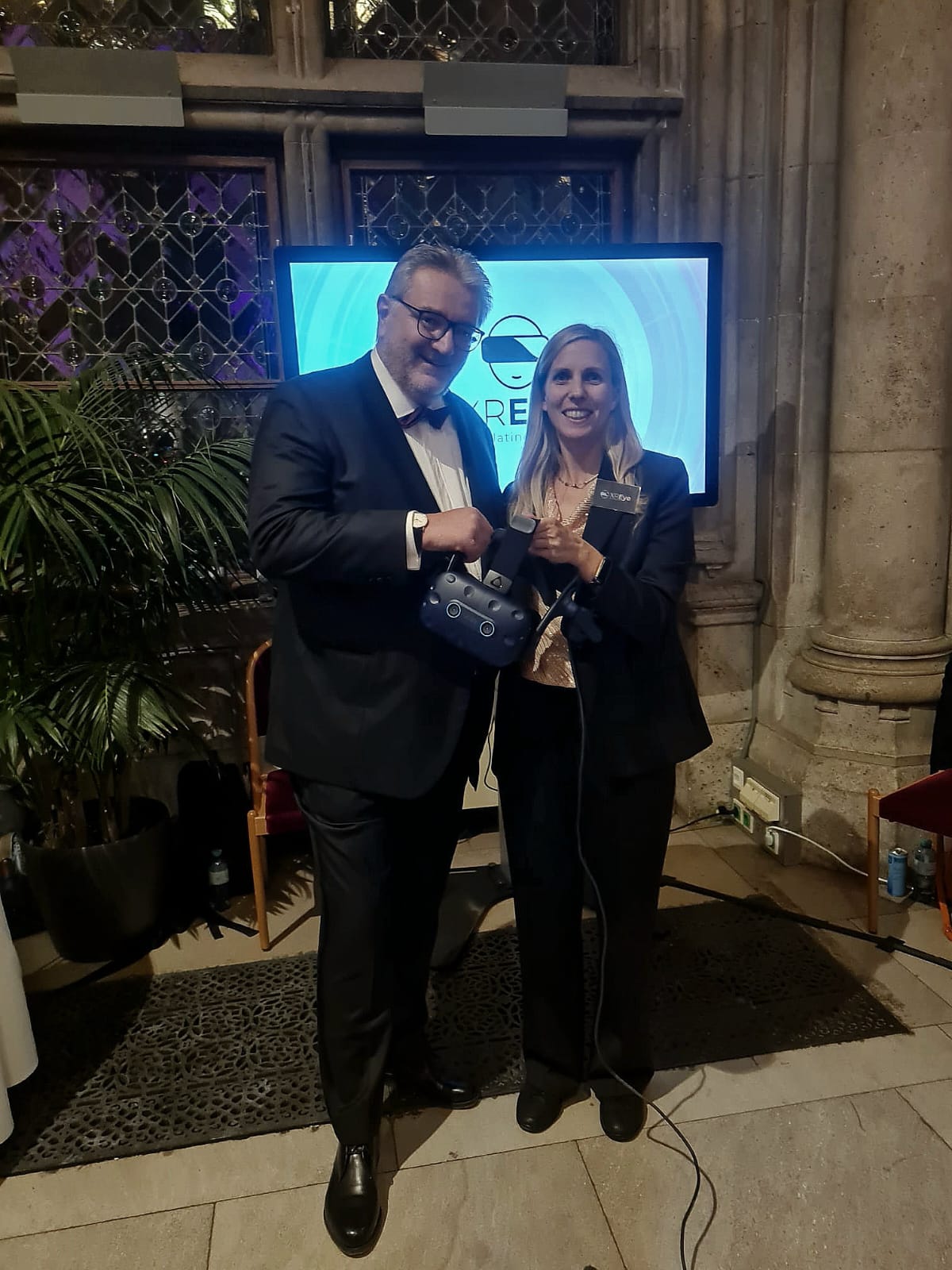
We were thrilled about the many inspiring conversations throughout the evening and especially about the visit of City Councillor Peter Hacker, who took the time to stop by our booth and learn more about XREye.
The Diversity Ball once again demonstrated that celebration, diversity and awareness go hand in hand. We are proud to have been part of this year’s event.
A closer look at the XREye Experience
Many visitors at the Diversity Ball tried our simulations and explored how various vision impairments influence everyday tasks. After the demonstration, more than thirty participants completed a short questionnaire, giving us meaningful insights into how the experience resonated with them.
How the demonstration worked
The session began in the 360° image mode, offering an immersive panoramic view. From there, we activated the simulation of a corneal disease. The cornea is the transparent front layer of the eye and plays a major role in focusing incoming light. Inflammation, allergies or injuries can cause clouding that leads to blurred vision, opal-glass-like haze and light sensitivity. Our simulation was based on the account of an affected person who described the sensation as “seeing the world through opal glass.” For this first impression, visitors saw 360° scene with and without green and yellow markings on the floor, illustrating that a well-designed guidance system can remain visible even when vision is significantly impaired.
We then switched to the VR mode, enabling a deeper dive into virtual scenes, followed by the demonstration of color blindness (achromatopsia). People with complete achromatopsia lack functional cone cells in the fovea. They perceive the world only in shades of grey, often slightly blurred, and are highly sensitive to bright light. This part of the experience revealed how challenging simple everyday tasks can be without color vision.
To complete the journey, participants entered the AR mode, which blends the physical environment with digital overlays of vision impairments. Here they experienced age-related macular degeneration (AMD). AMD affects the macula, the area responsible for sharp central vision. Abnormal blood vessels can cause fluid leakage and scarring, leading to central vision loss, distorted lines, reduced contrast sensitivity and less vibrant colors. With AR, these effects could be observed directly in the real environment.
The sequence of modes (360° image, VR and AR) allowed visitors to compare different conditions and understand how each one affects perception in unique ways.
Survey results: strong impact and high educational value
The feedback from participants clearly shows how powerful immersive experiences can be for raising awareness.
- 87% would definitely recommend the experience (Net Promoter Score: +87).
- 100% reported improved understanding of vision impairments (average 3.87 / 4).
- The perceived realism scored 3.35 / 4.
- 77% had no prior personal experience with vision impairments, yet 96% felt they could now better imagine the challenges of everyday life (average 3.84 / 4).
- Most frequently mentioned fields of application were:
— Education and training (94%)
— Healthcare and patient communication (87%)
— Architecture and accessible design (71%)
— Events and exhibitions (71%)
These results underline the scientific foundation and quality of years of development work behind XREye. They also demonstrate how immersive XR experiences can make the invisible visible and serve as an effective tool for promoting inclusion.
Conclusion
Our appearance at the Diversity Ball 2025 showed just how impactful immersive technology can be in fostering empathy and awareness for vision impairments. The strong feedback from participants highlights the realism, educational value and broad relevance of our simulations across many fields.
We are grateful for this opportunity and look forward to continuing our mission: helping people better understand vision impairments and contributing to more accessible environments